Fats Domino
Pioneering rock and roll pianist and singer from New Orleans.

Antoine Caliste 'Fats' Domino Jr. (February 26, 1928 – October 24, 2017) was an American singer-songwriter and pianist. One of the pioneers of rock and roll music, Domino sold more than 65 million records. Born in New Orleans to a French Creole family, he signed to Imperial Records in 1949. His first single 'The Fat Man' is cited by some historians as the first rock and roll single and the first to sell more than 1 million copies. Domino continued to work with co-writer Dave Bartholomew, contributing his rolling piano style to Lloyd Price's 'Lawdy Miss Clawdy' (1952) and scoring a string of mainstream hits beginning with 'Ain't That a Shame' (1955). Between 1955 and 1960, he had eleven Top 10 US pop hits. By 1955, five of his records had sold more than a million copies, being certified gold.
- born
- February 26, 1928
- died
- October 24, 2017
- field
- Singer-songwriter, pianist
- nationality
- American
- known_for
- Pioneer of rock and roll; hits including 'Ain't That a Shame' and 'Blueberry Hil
Verified Timeline
Lore & Background
Domino was born and raised in New Orleans, the youngest of eight children in a French Creole family. Louisiana Creole was his first language. He learned piano around 1938 from his brother-in-law, jazz guitarist Harrison Verrett. By age 14, Domino was performing in New Orleans bars. In 1947, bandleader Billy Diamond heard him at a backyard barbecue and hired him for the Solid Senders at the Hideaway Club, nicknaming him 'Fats'. Domino signed with Imperial Records in 1949, and with producer Dave Bartholomew co-wrote 'The Fat Man', a toned-down version of 'Junker Blues'; the record sold a million copies by 1951 and is widely considered the first rock-and-roll record to achieve that level of sales. Domino's rolling piano triplets provided the memorable instrumental introduction for Lloyd Price's first hit, 'Lawdy Miss Clawdy', recorded March 13, 1952. He crossed into the pop mainstream with 'Ain't That a Shame' (mislabeled as 'Ain't It a Shame'), which reached the Top Ten and debuted on the Billboard pop singles chart on July 16, 1955. Between 1955 and 1960, he had eleven Top 10 US pop hits. By 1955, five of his records had sold more than a million copies. His 1956 recording of 'Blueberry Hill' reached number 2 on the Billboard Juke Box chart and was number 1 on the R&B chart for 11 weeks, selling more than 5 million copies worldwide. Domino appeared in two films released in 1956: 'Shake, Rattle & Rock!' and 'The Girl Can't Help It'. On November 2, 1956, a riot broke out at a Domino concert in Fayetteville, North Carolina; police used tear gas, and Domino jumped out a window, slightly injuring himself and two band members. He left Imperial in early 1963 after the label was sold, moving to ABC-Paramount Records.
Reader's Guide
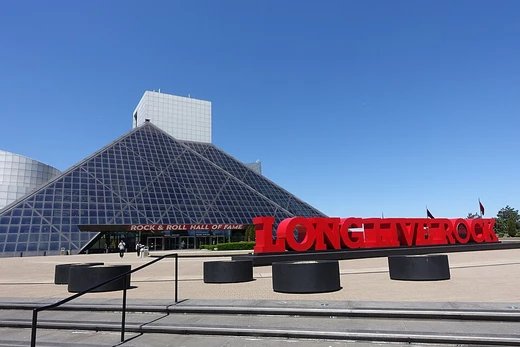
Fats Domino's significance lies in his foundational role in rock and roll. His first single 'The Fat Man' is cited by some historians as the first rock and roll single and the first to sell more than 1 million copies. Domino's distinctive rolling piano style and string of hits from 1955 to 1960 helped define the genre's early sound. Elvis Presley declared Domino a 'huge influence on me when I started out' and when they first met in 1959, described him as 'the real king of rock 'n' roll'. The Beatles were also heavily influenced by Domino. Four of his records—'Blueberry Hill', 'Ain't That a Shame', 'Walking to New Orleans', and 'The Fat Man'—were named to the Grammy Hall of Fame for their significance. He was inducted into the Rock and Roll Hall of Fame as part of its first group of inductees in 1986. The Associated Press estimates that during his career, Domino 'sold more than 110 million records'. Domino was shy and modest by nature but made a significant contribution to the rock and roll genre.
Did You Know?
- Domino's first single 'The Fat Man' is cited by some historians as the first rock and roll single and the first to sell more than 1 million copies.
- Elvis Presley described Domino as 'the real king of rock 'n' roll' when they first met in 1959.
- Domino's 1956 recording of 'Blueberry Hill' sold more than 5 million copies worldwide.
- A riot broke out at a Domino concert in Fayetteville, North Carolina on November 2, 1956; police used tear gas and Domino jumped out a window to escape.
- The Associated Press estimates Domino sold more than 110 million records during his career.
Roots in the Lower Ninth Ward
Antoine Caliste Domino Jr. arrived on February 26, 1928, in New Orleans, the youngest of eight children in a French Creole Catholic household. His grandmother, a midwife, helped deliver him at home, and his birth certificate initially carried the misspelled name Anthony. The family had recently relocated from Vacherie, Louisiana, settling in the Lower Ninth Ward, where his father played violin part-time at a racetrack. Louisiana Creole was the language spoken at the dinner table. Young Antoine attended the Louis B. Macarty School but left before completing his education to take a job assisting an ice delivery man. Around 1938, his brother-in-law, jazz guitarist Harrison Verrett, taught him piano. By his fourteenth year, he was already performing in local bars. In 1947, bandleader Billy Diamond happened to hear the teenager play at a backyard barbecue and immediately recruited him into his group, the Solid Senders, at the Hideaway Club. Diamond paid him three dollars a week and gave him the nickname "Fats," a label that would follow him for the rest of his life.
The Record That Started It All
In 1949, Imperial Records owner Lew Chudd signed the young pianist to a deal that paid royalties based on sales rather than a flat fee per song. That same year, Domino and producer Dave Bartholomew crafted "The Fat Man," a sanitized take on an earlier composition called "Junker Blues" that had dealt with drug addiction. The finished track featured Domino's signature rolling piano triplets, his playful "wah-wah" vocal interjections, and a driving backbeat. By 1951 it had moved a million copies, and many music historians now regard it as the first rock-and-roll single to cross that sales threshold. The song's legacy was formally recognized in 2015 when it was inducted into the Grammy Hall of Fame. Bartholomew went on to co-write many of Domino's subsequent hits, and the two built a prolific partnership that would define the mid-1950s. The rolling piano sound Domino brought to the studio became so distinctive that it would later appear on other artists' records, cementing his role as a foundational voice in the genre's earliest days.
The Rolling Piano and a String of Hits
From 1955 onward, Domino's career exploded into the mainstream. "Ain't That a Shame" became his first entry on the Billboard pop singles chart, debuting at number fourteen in July 1955, though a milder Pat Boone cover climbed to number one in an era still shaped by racial segregation. Between 1955 and 1960 he racked up eleven Top 10 pop hits, and by 1955 five of his records had already earned gold certification. His 1956 rendition of "Blueberry Hill" spent eleven weeks atop the R&B chart and sold over five million copies worldwide, later being covered by Elvis Presley, Little Richard, and Led Zeppelin. His backing band—saxophonists Herbert Hardesty, Reggie Houston, Lee Allen, and Fred Kemp; bassists Billy Diamond and Frank Fields; drummers Earl Palmer and Smokey Johnson—provided the tight, swinging foundation for all of it. Domino even sat in as a session pianist for other labels, most memorably laying down the iconic triplets on Lloyd Price's "Lawdy Miss Clawdy" in 1952. In 1957 he observed that what the world now called rock and roll was simply the rhythm and blues he had been playing in New Orleans for fifteen years.
A King in Retrospect
Despite his quiet, modest personality, Domino's influence on popular music proved enormous. When Elvis Presley first met him in 1959, he called Domino "the real king of rock 'n' roll" and later declared him a "huge influence" on his own early development. The Beatles, too, drew heavily on his sound. Over the course of his career, the Associated Press estimated his total record sales at more than 110 million copies. Four of his recordings—"The Fat Man," "Ain't That a Shame," "Blueberry Hill," and "Walking to New Orleans"—were enshrined in the Grammy Hall of Fame for their lasting significance. In 1986, Domino was inducted into the Rock and Roll Hall of Fame as part of its very first class of honorees. He also made two film appearances in 1956, including the movie "Shake, Rattle & Rock!" His debut album, released in November 1955 on Imperial and later reissued as "Rock and Rollin' with Fats Domino," reached number seventeen on the Billboard Pop Albums chart. Fats Domino passed away on October 24, 2017, leaving behind a body of work that helped define an entire genre.
Frequently Asked Questions
Who is Fats Domino?
Antoine Caliste "Fats" Domino Jr. (1928–2017) was a New Orleans-born pianist and singer-songwriter widely recognized as one of the foundational figures in rock and roll. He built his career around a distinctive boogie-woogie piano style rooted in the French Creole musical tradition of his hometown.
Why is "The Fat Man" considered so important in music history?
Released in 1949 on Imperial Records, this debut single is frequently cited by historians as the first rock and roll record to surpass one million copies in sales. It essentially set the template for the genre's early commercial breakthrough.
What are Fats Domino's most famous songs?
Beyond "The Fat Man," his catalog includes enduring standards like "Ain't That a Shame" and "Blueberry Hill." These tracks became staples of mid-century popular music and remain covered by artists across multiple genres.
How commercially successful was Fats Domino over his career?
He sold more than 65 million records worldwide, a remarkable figure for an artist working primarily within a regional New Orleans sound. His longevity on the charts spanned from the late 1940s through the 1960s and beyond.
When did Fats Domino die and how old was he?
He passed away on October 24, 2017, at the age of 89. His death closed a life that had shaped nearly seven decades of popular music, from the earliest rock and roll recordings to the late-20th-century revival of New Orleans R&B.
More in Pioneers Of Rock & Roll 1-23
Related in Pioneers Of Rock & Roll
Links follow this subject's own source article.
Spotted an error? Know more?
This is a living reference — every entry is fact-audited, and reader corrections feed straight into our audit queue. Suggest an edit · See this site's audit record