Ritchie Valens
Rock and roll pioneer who died in a plane crash at age 17.

Richard Steven Valenzuela (May 13, 1941 – February 3, 1959), known professionally as Ritchie Valens, was an American guitarist, singer, and songwriter. A rock and roll pioneer and a forefather of the Chicano rock movement, he died in a plane crash just eight months after his breakthrough. He is best known for his hit 'La Bamba,' an adaptation of a Mexican folk song that became a rock and roll success in 1958, and for the number-two hit 'Donna.'
- born
- May 13, 1941, in Pacoima, Los Angeles, California
- died
- February 3, 1959, in a plane crash in Iowa
- field
- Music (rock and roll, Chicano rock)
- nationality
- American
- known_for
- Pioneering Spanish-language rock and roll; hits 'La Bamba' and 'Donna'; death in
Verified Timeline
Lore & Background
Ritchie Valens was born Richard Steven Valenzuela on May 13, 1941, in Pacoima, a neighborhood in the San Fernando Valley of Los Angeles. His parents were from Vícam, Sonora, and were of Yaqui Native Mexican descent. He was raised hearing traditional Mexican mariachi music, flamenco guitar, R&B, and jump blues, and began making music by age five. Though left-handed, he learned to play a right-handed guitar. At 15, he was a student at Pacoima Junior High School during the 1957 Pacoima mid-air collision but was absent attending his grandfather's funeral; recurring nightmares of the disaster led to a fear of flying. He later attended San Fernando High School. Valens was discovered by Bob Keane, owner of Del-Fi Records, after a tip from a student in May 1958. Keane signed him on May 14, 1958, and suggested the stage name 'Ritchie' and shortening his surname to 'Valens' to broaden appeal. His first recordings at Gold Star Studios included 'Come On, Let's Go' and 'Framed.' His double A-side single 'Donna' and 'La Bamba' sold over one million copies. By autumn 1958, he dropped out of high school due to career demands. He performed on Dick Clark's American Bandstand, in Honolulu, and at Alan Freed's Christmas Jubilee Show in New York. His only live recording was a concert at Pacoima Junior High School in December 1958. Valens was in a relationship with Donna Ludwig from 1957 until his death; his song 'Donna' was written for her. He died on February 3, 1959, in a plane crash in Iowa, an event known as 'The Day the Music Died,' which also killed Buddy Holly, J. P. 'The Big Bopper' Richardson, and pilot Roger Peterson. Valens was 17. He won his seat on the plane via a coin toss with Tommy Allsup. His debut album was released nine days after his death, and his second album 'Ritchie' in October 1959.
Reader's Guide
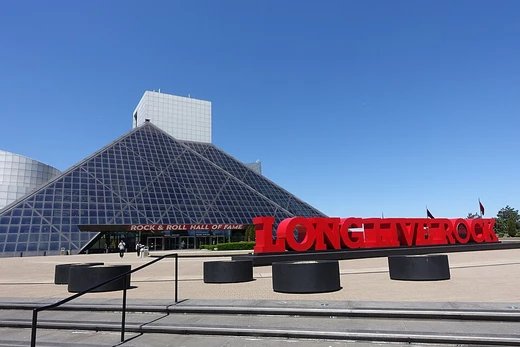
Ritchie Valens was a pivotal figure in early rock and roll and a foundational artist in Chicano rock. His adaptation of the Mexican folk song 'La Bamba' into a rock rhythm and beat made him a pioneer of Spanish-speaking rock and roll, breaking cultural barriers in the late 1950s. Despite a career lasting only eight months, his hits 'La Bamba' and 'Donna' achieved lasting popularity, with 'La Bamba' becoming a rock standard. His death at age 17 in the same plane crash that killed Buddy Holly and J. P. Richardson cemented his status as a tragic icon of rock's early era. Posthumously, Valens was inducted into the Rock and Roll Hall of Fame, the Rockabilly Hall of Fame, the Native American Music Awards Hall of Fame, and the California Hall of Fame, and received a star on the Hollywood Walk of Fame. His legacy endures as a symbol of the fusion of Mexican musical heritage with American rock and roll, influencing generations of Latino musicians. The 1987 biopic 'La Bamba' further popularized his story.
Did You Know?
- Valens was absent from school during the 1957 Pacoima mid-air collision because he was attending his grandfather's funeral; recurring nightmares of the disaster led to his fear of flying.
- He won his seat on the fatal plane by winning a coin toss with Buddy Holly's backup guitarist Tommy Allsup.
- Valens' debut album was released nine days after his death, and his second album 'Ritchie' followed in October 1959.
- His stage name 'Ritchie' was chosen by Bob Keane because 'there were a bunch of Richards around at that time,' and his surname was shortened from Valenzuela to 'widen his appeal beyond any obvious ethnic group.'
- Valens' only live performance ever recorded was a concert at Pacoima Junior High School in December 1958, released posthumously as 'Ritchie Valens in Concert at Pacoima Jr. High.'
Frequently Asked Questions
Who is Ritchie Valens?
Ritchie Valens was the stage name of Richard Steven Valenzuela, a Mexican-American guitarist, singer, and songwriter born in Pacoima, Los Angeles, in 1941. He became one of the earliest rock and roll artists to fuse Spanish-language folk traditions with electric-guitar-driven rock. His tragically short career nonetheless cemented him as a foundational figure in both rock and roll and the Chicano rock movement.
What songs made Ritchie Valens famous?
His signature 1958 hit "La Bamba" reimagined a traditional Mexican folk melody as a driving rock and roll track and became one of the first Spanish-language songs to crack U.S. national charts. "Donna," a number-two single, further proved his ability to craft original rock material. Together, those two records defined his brief but influential recording output.
How did Ritchie Valens die?
On February 3, 1959, Valens was killed in a small-plane crash near Clear Lake, Iowa, alongside Buddy Holly and J. P. "The Big Bopper" Richardson. He was only seventeen, just eight months after "La Bamba" had become a national hit. The disaster, often called the "Night the Music Died," ended three promising careers almost overnight.
Why is Ritchie Valens important to rock and roll history?
Valens is widely regarded as a forefather of Chicano rock because he brought Mexican folk-song structures into the electric rock and roll format before any other mainstream artist. His success showed that Spanish-language songs could thrive on American charts, paving the way for later Latin rock and punk musicians. Without his influence, the trajectory of rock and roll in the 1960s and beyond would likely look very different.
Where was Ritchie Valens from and what shaped his music?
He was born Richard Steven Valenzuela on May 13, 1941, in the Pacoima neighborhood of Los Angeles, California, into a working-class Mexican-American family. He grew up immersed in Mexican folk music and taught himself guitar by ear, later forming a band with his brothers. Those Valley roots deeply shaped the melodic sensibility and storytelling behind his recordings.
More in Pioneers Of Rock & Roll 1-23
Related in Pioneers Of Rock & Roll
Links follow this subject's own source article.
Spotted an error? Know more?
This is a living reference — every entry is fact-audited, and reader corrections feed straight into our audit queue. Suggest an edit · See this site's audit record